

How Old is My Roof?
Unless you purchased your house when it was newly built, you probably won’t know exactly how old your roof is. While it’s not essential information, it can help you anticipate certain problems and give you an inkling as to whether it’s time for a roof replacement.
In this post, we’ll discuss how to find out the age of your roof.
What is your roof made of?
In some cases, your roof’s materials can give you a rough idea of when it was installed.
Firstly, in terms of the covering. Slate roofs can last upwards of 100 years with the right maintenance, while clay tiles have a typical lifespan of 70 years and concrete a bit shorter. If your roof has clay or concrete tiles, that usually means it’s less than 70 years old.
Digging a little deeper, you can also get a clue from the use of roofing felt. Many roofs installed before the second world war (and some after) didn’t have felt underneath the tiles. Instead, tiles were back-pointed to keep them in place. (Mortar applied in the attic space)
If your roof doesn’t have felt, you can be pretty sure it’s been in place for upwards of 60 years. As a result, many of these roofs will have tiles slipping out of place over time as the pointing wears away.
All that said, the materials can only give you a rough estimate. Here are some ways to get a better idea of your roof’s age…
1. Ask the previous owners
Moving day doesn’t have to be the last time you speak to the previous owners. It’s useful to keep in touch with them at the very least so you can contact them about any of their post you get.
If you still have their number or email address, they usually won’t mind answering questions about the roof. They might have owned the house long enough to know when the roof was installed, or they could be able to point you in the direction of the previous owners.
2. Check the deeds
Your house’s deeds show the chain of ownership for the property you own. In some cases, they will include records of work that’s been done on the house, which could give you more information about the new roof – especially if it required planning permission.
However, the deeds can also give you information about previous owners if you’re looking to get in touch with them about the roof.
3. Get a roofing company to estimate
Having worked on hundreds of roofs over the years, experienced roofing companies know a fair bit about the age of a roof.
With a proper inspection, they will be able to give you a reliable estimate of a roof’s age and any issues you might be facing, those you can expect to face in the coming years and what you can do to protect your home.
Age is just a number
It’s important to consider the condition of your roof as well as how old it is. It could be 5 years old but in a poor condition due to shoddy installation – or 60 years old but still in good condition.
At DPR Roofing, we work with roofs of all ages throughout Barnsley, giving each job the same high level of care and attention. If you’re concerned about the age or condition of your roof, we’re only a phone call away. Contact our team today on 01226 670 008.


COVID-19 Customer Update
After careful consideration and based on further guidance received from the Government we have decided to re-open for business from Tuesday 14th April to provide services following strict procedures that comply with the COVID-19 guidelines.
We are still able to quote and complete all roofing problems and we are maintaining a safe distance to keep our staff and customers safe. Please note we WILL NOT enter any persons home or outbuildings to carry out quotes or works until we are informed this is safe to do so.
We will, of course, operate within the guidelines set out by the Department of Health & Social Care (DHSC), Public Health England (PHE) and the Health and Safety Executive (HSE) to ensure we continue to work safely.
We will continue to support you, stay safe.

How Can Storms Damage Your Roof?
As the umbrella to your property, your roof is in place to protect your home or commercial building from the weather. However, when the weather gets severe, it can actually cause damage to your roof, which in turn stops it doing its job.
As with any kind of damage to your property, the more you know the better. Read on as we look at three ways storms can damage your roof.
Rain damage
Rain exploits any pre-existing issues with your roof. It gets through cracks in tiles or slates, runs down gaps in the flashing and seeps into poorly pointed chimney stacks.
While some roofs can hold out against the usual day to day rainfall, the heavy and prolonged rainfall in a storm makes it much harder for them to withstand the damage. During Storm Dennis, for example, many locations saw almost a month’s worth of rain fall in just over a day.
When that rain gets through your roof’s covering, it can cause damage to your roof space and the structure of your roof such as the timbers. On top of that, it could leak into other parts of your property and even cause ceilings to collapse.
Damage from wind
There are also several issues with your roof that can be caused by wind. Storm Ciara was the most severe example of this over the past few months, with winds as high as 97mph. It’s not uncommon for these gale-force winds to blow off any loose part of your roof.
Loose tiles can be blown off, leaving parts of your roof poorly covered. Or perhaps your guttering wasn’t securely fixed and is now hanging off.
Of course, the higher the winds get, the more serious the damage. During Storm Ciara, there were several reports of roofs which had actually been blown off. Entire sections of some roofs were lifted off in the high winds, leaving buildings completely out of use.
What about ice?
Snow and ice go hand in hand with many storms. Fortunately, snow isn’t a massive concern. While heavy snowfall can add weight to the surface of your roof, the levels we get in the UK are rarely enough to pose a serious threat.
However, the freezing temperatures themselves can cause damage. Water can get into even the smallest gaps or cracks in your roof. When that water freezes into ice, it expands in size. This can cause cracks and gaps to get worse, as well as damaging the pointing on your chimney. As this process happens again and again, it can eventually lead to serious issues with your roof.
The best course of action
Whether you’ve spotted missing tiles and loose guttering or you just want to check your roof’s condition following bad weather, the best course of action is to arrange a professional roof inspection.
With over three decades of experience in roofing, the team at DPR Roofing in Barnsley know exactly what to look for when inspecting a roof. We’ll check over every aspect of your roof and recommend the right repairs to keep your property protected.
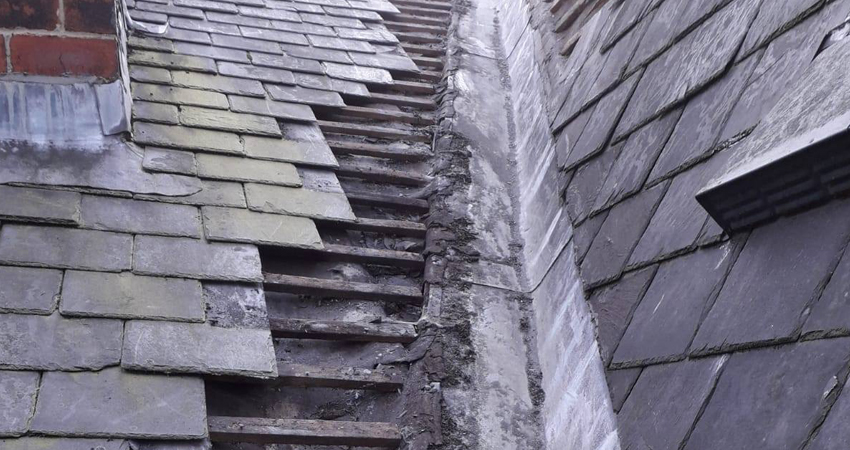
Can Roofs Really ‘Blow Off’?
Leaks and poor insulation are common worries when it comes to roofs. However, they’re really put into the shadows by the nightmare idea of having your roof blown off! In an instant, you’re hit with massive repair costs, potential danger and the risk of further damage to your home or commercial building.
Not to mention that anyone inside the property will no longer have ‘a roof over their head’. It’s fair to say any property without a roof will be out of use for at least a few days.
In this post, we discuss whether roofs can actually blow off and what to do if the worst happens to your property.
UK wind speeds
With an average wind speed of around 9mph, the UK is mostly safe from roofs blowing off or even small-scale roof damage on a normal day. However, when a storm hits, things can change very quickly.
Gale-force winds, a term commonly used by weather forecasters, refers to winds of above 40mph. But that’s far from the worst of it. The Met Office recorded winds of 80mph when Storm Ciara was in full force, equalling the wind speeds of Storm Atiyah which hit the UK and Ireland in December 2019.
That can get even worse in high or coastal areas, with wind speeds of 118mph, 124mph, 142mph and even 173mph recorded over the past few decades.
Blowing the roof off
The question is: can these gale-force winds actually blow off parts of your roof? Unfortunately, the answer is yes. That extends to both commercial and domestic roofs.
The roof of a Sainsbury’s in Cornwall was partly blown off in December during Storm Atiyah. A couple in the Welsh Valleys faced a similar fate when their roof was blown off by Storm Ciara.
In both cases, the disruption was massive. Sainsbury’s had to close for two days while the roof was replaced, while owners of the home in Pen-y-Graig were left with a house that just wasn’t safe to stay in.
Protecting your house from gale-force winds
In truth, a strong roof should be able to hold out against even the strongest winds. Gale-force winds will take advantage of any weak spots on your roof, whether that’s loose tiles and flashing or poorly installed decking.
Whatever the case, the best course of action is to have your roof regularly inspected by a team of professional roofers. That way, any problems will be identified and rectified before the bad weather has a chance to make them worse.
Expert roof repairs
Sometimes, big problems with your roof are unavoidable. Maybe, like the home in Wales, you had your roof renewed but couldn’t tell that it was a bad job until disaster struck. Whatever the case, DPR Roofing are on hand to help across Barnsley and the surrounding areas.
Our team of roofing experts has been providing dependable roof repairs and new roofs for over three decades. Best of all, we offer a 24/7 emergency call-out service to existing customers, so you’re covered if anything does go wrong when the bad weather hits.
Give us a call on 01226 670 008 to find out more about our reliable roofing services.

How to Make Your New Roof More Sustainable
The environment is big on everyone’s mind at the moment – and rightly so. When investing in something new, it can often feel like you’re instantly making a negative impact. That’s no different for your roof.
Fortunately, there are ways to make your new roof more sustainable and minimise the impact on the environment…
Make it long lasting
Whether it’s fast-fashion or throwaway technology, there are far too many things we buy with a view to disposing. Why? In most cases, it’s driven by cost savings. Buying cheaper gives you what you want now, but it will probably need replacing much sooner.
In most ways, the approach is the same with your roof. A well-maintained concrete tile roof will last around 40 years, rising to 60 years with clay tiles and upwards of 100 years for slate. That’s reflected in their cost. Slate is the more expensive of the three but will offer better longevity and improved sustainability as a result.
Make it energy efficient
On top of that, your new roof can reduce your impact on the environment by improving your home’s energy efficiency. Every building has a thermal envelope, comprising the walls, windows, doors, floor and roof, which come together to keep heat inside.
If any of these elements are weak, they’ll compromise the thermal envelope and let heat out. With that in mind, an old roof can often make it harder to heat your home. Over time that will cost more in energy bills, but also increase your carbon footprint.
A new roof can make your home more energy efficient and reduce your energy usage over time. That benefit can be heightened if your roof uses the best materials with expert installation.
Get the right materials
Not all roofing materials are equal when it comes to sustainability. Not just because some last longer either. Cement – a key component of concrete tiles – poses numerous environmental problems, not least accounting for 10% of global man-made CO2 emissions.
Similarly, extracting the clay used to make clay tiles can contribute significantly to air and water pollution, soil erosion and geo-environmental disasters. In both cases, the energy used to heat the tiles in production will further impact their sustainability.
In contrast, slate has a relatively good reputation when it comes to the environment. It’s 100% natural and doesn’t require any damaging chemicals for production. Combined with its superior longevity, it’s clear slate is the most sustainable option for your new roof.
Choosing the right suppliers
Whatever materials you choose, you can improve the sustainability by choosing reputable suppliers. At DPR Roofing in Barnsley, we use the likes of SIG Roofing and Burton Roofing for all our roofing materials, so you can rest assured all materials are sustainably sourced wherever possible, minimising the impact on the environment.
If you would like to talk more about the sustainability of your new roof, we’re on hand to help. Our team of specialist roofers can provide the most eco-friendly and sustainable solution for your roof. That includes expert installation to maximise energy-efficiency and boost longevity. Put us to the test today!

4 Benefits of a Professional Roof Cleaning
You get your car cleaned. You probably get your windows cleaned. Plenty of us even get our bins cleaned now too. So, what about your roof? In truth, roof cleaning is far more important than all of the above.
In this post we’ll look at four reasons it’s well worth having your roof professionally cleaned.
1. Appearance
First of all, much like window and car cleaning, roof cleaning will make sure your roof looks its best. That will dramatically improve kerb appeal, which will always help if you come to selling your property.
However, unlike your windows or car, it’s not something you should try yourself. Whether it’s for repairs or cleaning, getting on your roof is a dangerous task without training.
2. Get rid of moss
Growing in areas with plenty of moisture, moss can easily develop on your roof. When it does, it’s both an eyesore and a potential problem with the way your roof works. Moss holds moisture on your roof, which can cause discolouration and even degradation of roofing materials over time.
If it’s left and ignored, it could cause serious damage. A professional roof cleaning service will make sure all moss is removed from your roof, leaving it looking great and functioning fine.
3. Cleans your gutters
Where required, a professional roof clean will also take care of your gutters, which is vital for your roof’s function. Gutters need to be fully cleared so rainwater can run freely through them and down your drains.
However, over time, they can become built up with leaves and other debris. These blockages will cause water to overflow and add weight to your gutters which could lead to cracks and breaks. In short, it’s better to keep them clear so they can work properly all year round.
4. Good time for an inspection
Any roofer worth their salt will make sure they check over your roof while it’s being cleaned. If they notice a broken or missing tile, loose flashing or worn-down pointing on your chimney, they can let you know or even fix it in the process.
That could prove invaluable in the long run, as it means you don’t have to fork out for costly repairs further down the line.
How often you should get your roof cleaned?
With all the rain, wind and debris your roof faces, we recommend getting it cleaned at least once year. As mentioned above, you can combine this with a full inspection and even gutter cleaning to make sure your roof is fully serviced and ready for the year.
Professional roofing services in Barnsley
Whether you’re looking for roof cleaning, guttering services or a professional inspection, DPR Roofing in Barnsley is here to help. We’re a team of fully trained roofers with expertise across the board. Whatever your requirements, domestic or commercial, we’ll provide roofing services that are tailored to you. Give our team a call on 01226 670 008

The Benefits of a Flat-to-Pitched Roof Conversion
In recent years, we’re seeing more and more flat roofs being converted to pitched. Why? Many people kept their roof flat when adding an extension or installing a garage to reduce costs, and now want to upgrade them.
But, as with any home renovation, it’s important to weigh up the benefits, costs and any potential drawbacks. In this post, we’ll look at the benefits of converting a flat roof to a pitched roof – and whether it’s the best option for you.
Why would you want a pitched roof?
While flat roofs have a slope of less than 10 degrees, pitched roofs are typically upwards of 40 degrees. This naturally makes it easier for rain to run off them as it falls and makes pitched roofs less prone to leakage.
Another benefit of pitched roofs is that they provide extra space in a room. This is especially the case with large buildings, which can have the roof space converted into a usable loft. However, smaller garage or extension roofs can also be used for storage when pitched or just to give the room an airier feel.
All that said, the main benefit of a pitched roof has to be its appearance. Pitched roofs are far more pleasing on the eye. As well as a more stylish shape, they can be constructed from clay or concrete tile in various colours, or even natural stone and slate.
Are there any reasons against a conversion?
Of course, it’s not all one way when it comes to a pitched roof conversion. Firstly, there is the cost. Adding a pitched roof to an existing structure will set you back thousands of pounds.
On top of that, there’s the complication of planning permission. To be considered a permitted development, new roofs must not exceed the highest point of the existing roof or protrude more than 150mm above the plane of the existing roof.
However small, any pitched roof will undoubtedly go against both of these requirements. That means you’ll need to apply for planning permission before starting the conversion. As well as eating away at your time, the application will cost you £172 – or £166 in Wales.
What’s the best solution?
If your flat roof has become leaky and hard to maintain, it’s likely you’ll need to replace it. However, replacing a flat roof doesn’t have to mean installing a pitched roof. In terms of function, you could get a lot more for your money with an upgraded flat roof.
The latest flat GRP roofs are incredibly watertight as they are a one-piece roof with no seams or joints at all. Despite costing less than a pitched roof and requiring no planning permission, they can even outlast a pitched roof such as a concrete tiled roof.
New roofs in Barnsley
If you want to upgrade your flat roof in Barnsley, DPR Roofing can help. Whether you want the water resistance of GRP or the style of a tiled pitched roof, we’ll recommend the best solution for your budget and install a strong, long-lasting roof.
Call our team on 01226 670 008 to arrange a no-obligation quote.

3 Benefits of Annual Roof Inspections
Annual roof inspections are a great way to check your roof is in working order. But there are still many property owners, commercial and residential, who don’t have their roof checked. Why? Maybe it’s cost, or maybe they just keep putting it off like a trip to the dentist. And that’s how you end up with bad teeth, right?
In this post, we’ll look at the benefits of annual roof inspections and why you should get yours booked in soon.
Servicing your roof
Having your roof inspected is a bit like servicing your car. It’s an annual check to make sure everything is in working order. Most importantly, it makes sure the car or roof is ready to perform over the coming year.
Ask car owners, and you’ll struggle to find many that ignore their car servicing. Why? It’s a valuable asset to them. If it breaks down, their life will be put on hold and they’ll have to fork out to get it fixed at short notice.
So why do so many ignore their roof servicing? All of the above is equally true for your roof, which is the umbrella to your property. If there’s a leak, your life will be thrown into limbo until it’s fixed – not to mention the damage to your possessions or other parts of your property.
Wouldn’t it be easier to have an annual inspection? Here are three of the key benefits…
1. Protection
Your roof is there to protect your property, your possessions and the people inside. By keeping water out, it makes sure there’s no problems with your home’s structure or electrics and keeps everyone safe.
Having your roof inspected once a year will make sure it’s doing exactly that. Remember, prevention is always better than the cure.
2. Cost
As well as being more effective than acting afterwards, preventing problems is cheaper. A roof inspection is a single manageable cost that you can account for each year. On the flipside, if there’s an unexpected issue with your roof, you may have to fork out hundreds that you simply don’t have.
Once water penetrates your roof, it can cause problems with your property’s structure or electrics and damage contents. Repairing and replacing these adds even more to the cost, all of which could have been avoided with an inspection.
3. Peace of mind
In some cases, you could get lucky and have a year without any problems. But without an inspection, you’ll spend that year worrying. Whenever the rain gets heavy, you’ll be thinking about your roof and whether it can cope with the rainfall.
Is that constant unease really worth it to save a bit of money in the short-term?
Don’t ignore your roof!
Nipping small repairs in the bud can save a lot of unease, stress and money compared to ignoring them and waiting a serious problem to develop. If you want to look after the very thing that protects you and your home, the team at DPR Roofing can help.
We offer professional roof inspections and repairs across Barnsley. With over three decades of experience, you can expect a thorough survey of your roof with repairs that stand the test of time.
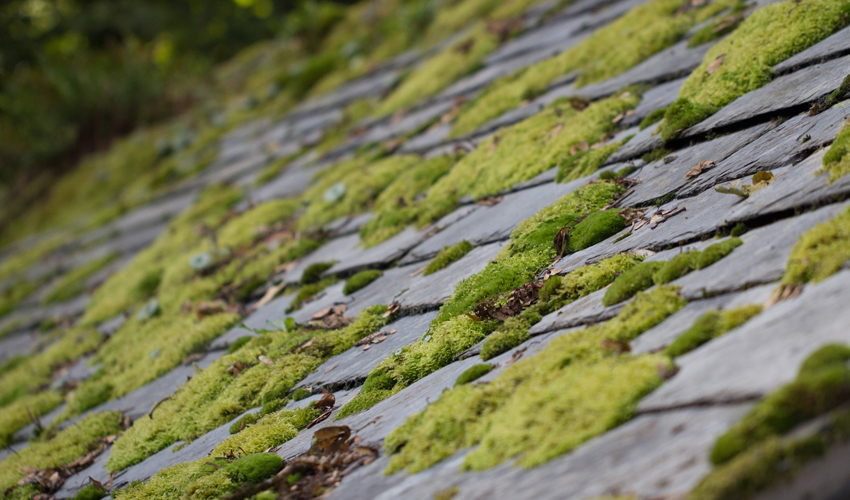
6 Reasons Why You Should Remove Moss from Your Roof
 While professional roof inspections are always safer and more thorough, there’s no danger in inspecting your roof from ground level every now and again. When you do, one of the problems you might see is moss. The question is: how much of a problem is it?
In truth, it can be a nightmare if it’s left to develop.
Read on as we look at six reasons why it’s important to get moss removed as soon as possible.
1. Obstructing rain flow
All roofs – flat or pitched – are designed with a slope to let water run directly off. It goes into the gutters and runs down the drains away from your property. When moss is growing on your roof, it creates an obstruction, stopping rainwater from flowing as it should. Under a heavy downpour, this water can soon get backed up under the slates or tiles and make its way into the roof space or loft area. You may not know that the water is soaking all the timbers holding the tiles in place as it is trapped between the tiles and the underfelt. Only with time will the catastrophe reveal itself when it will be a whole new roof instead of just moss cleaning.
2. Holding water
Moss grows into a dense clump on various parts of your roof. As well as obstructing rainwater, it can even hold it on your roof. This can damage roofing materials as they’re not supposed to have moisture constantly held against them. Over time they will weaken, become porous and discolour, even after moss is removed.
3. Extra weight
On top of all that, the moss will add considerable pressure to your roof when wet. While moss itself is relatively light, it can hold up to 20 times its dry weight in water. For weaker roofs, this could be the straw that breaks the camel’s back.
4. Freezing and cracking
Having water held on your roof is one problem – what if it turns to ice?
As the temperature drops, the water held by moss seeps into roofing materials or open joints and freezes. When it does so, it expands by around 10%. That’s enough to form cracks or turn existing cracks into bigger holes.
5. Clog gutters
As well as sitting on your roof, moss can fall or be blown into your guttering. This will block your gutters and cause water to overflow, spilling onto your property’s walls and letting moisture into your home. If it makes its way to the foundations, it can even cause serious structural damage.
6. Looks bad
On top of everything else, moss just looks bad. It’s a sign to your neighbours, potential customers or just anyone passing by that you don’t care for your property. As mentioned, it can also discolour your roofing materials permanently if it’s not removed promptly, which could significantly reduce your home’s kerb appeal.
Moss removal in Barnsley
If moss is developing on your home’s roof, there’s no use waiting around. The problem will only get worse and lead to other issues like roof damage and water ingress.
DPR Roofing provides domestic roofing services across Barnsley. With our team of professional roofers, you can have moss removed from your roof in no time, leaving your home secure and looking its best. Contact us today for more information.

Which Roofing Material Lasts the Longest?
In some cases, shortcuts and hacks can be a great way to save time and money. Not with your roof. When it comes to roofing, quality is key. Materials that are sturdy, durable and long-lasting run circles around cheaper alternatives and always promise better value for money.
So, what should you choose for your next project? Read on for an introduction to some of the most durable roofing materials on the market.
Welsh slate
In terms of durability, nothing compares to Welsh slate. While contemporary materials like concrete tiles offer a lifespan of around 50 to 60 years, Welsh slate boasts an impressive 200+ years of performance.
Laid directly onto the roof, slate is unwavering to rot which plays a major role in its durability. The heavy nature of slate makes it incredibly resistant to high winds. In the UK, slate also wins points for its timeless aesthetic, which makes it a winning choice for both historic and contemporary buildings.
It's no surprise that Welsh slate continues to endure as one of the most hard-wearing roofing materials on the market, with the fine-grained metamorphic rock quarried and mined in the country since Roman times.
Today, you'll see centuries-old slate at Caernarfon Castle, a historic fort that traces its history to 1283. Depending on your project, you can invest in new or reclaimed slate for a traditional look or opt for modern and more affordable alternatives such as synthetic or reconstituted slate.
Sheet lead
Another material that's been used in the UK for centuries, sheet lead offers exceptional longevity. It's often used as an outer layer to protect delicate materials like stone and is 100% watertight, as well as resistant to corrosion, UV damage and rot.
Extremely flexible, lead sheeting can be moulded and stretched to cover unconventional shapes and surfaces. Think church steeples, domes, gabled roofs and other historic buildings. It's also a popular choice for modern builds and looks especially striking against masonry work.
Lead sheeting expands and contracts with fluctuating temperatures which makes it a great option for withstanding the unpredictable and often harsh British climate. Depending on the thickness, lead sheet roofing can last for more than 100 years. Looking for an environmentally friendly option? A high recycling rate and low melting point give lead sheet roofing an eco-conscious edge and low carbon footprint.
Concrete and clay tiles
While they don't hold up as well as Welsh slate and sheet lead, concrete and clay tiles are still an excellent choice if you're prioritising longevity. Both have been used in construction for thousands of years and offer lifespans of 50 to 100 years, as well as benefits such as resistance to fire and rot. Choose a traditional look or take advantage of modern manufacturing techniques that produce concrete and clay tiles in a myriad of shapes, colours and styles.
The best material for you
If you're all about doing it right the first time, upgrading to materials like Welsh slate, sheet lead and concrete or clay tiles is well worth the outlay. At DPR Roofing, we help clients choose the best material for them in terms of their budget, preferred appearance and longevity. Our Barnsley-based team has over 35 years’ experience installing new roofs, so you can rest assured you’re in safe hands.